
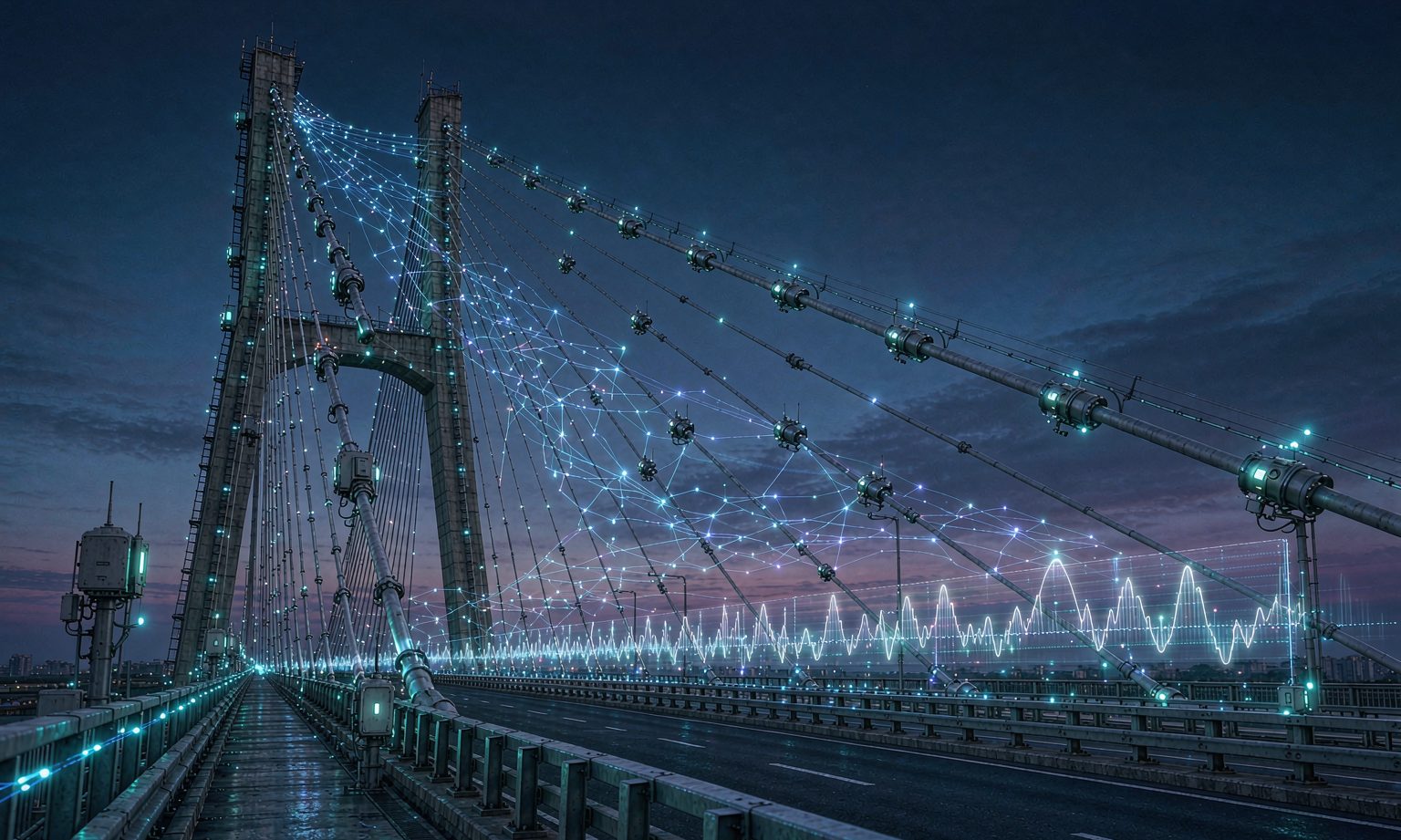
Bringing Pretraining into Structural Monitoring: Time-Series Foundation Models Are Rewriting Anomaly Detection
Every new bridge or tunnel monitoring project means re-selecting features, re-tuning thresholds and re-training models — a long-standing pain in the industry. Time-series foundation models bring the pretrain-once-apply-anywhere playbook into sensor data, delivering forecasts and anomaly scores on new projects with little or no fine-tuning. This article breaks down the technology, three practical uses, a real deployment ledger across 47 bridges, and the hard walls of high-frequency data and edge compute.
Read more →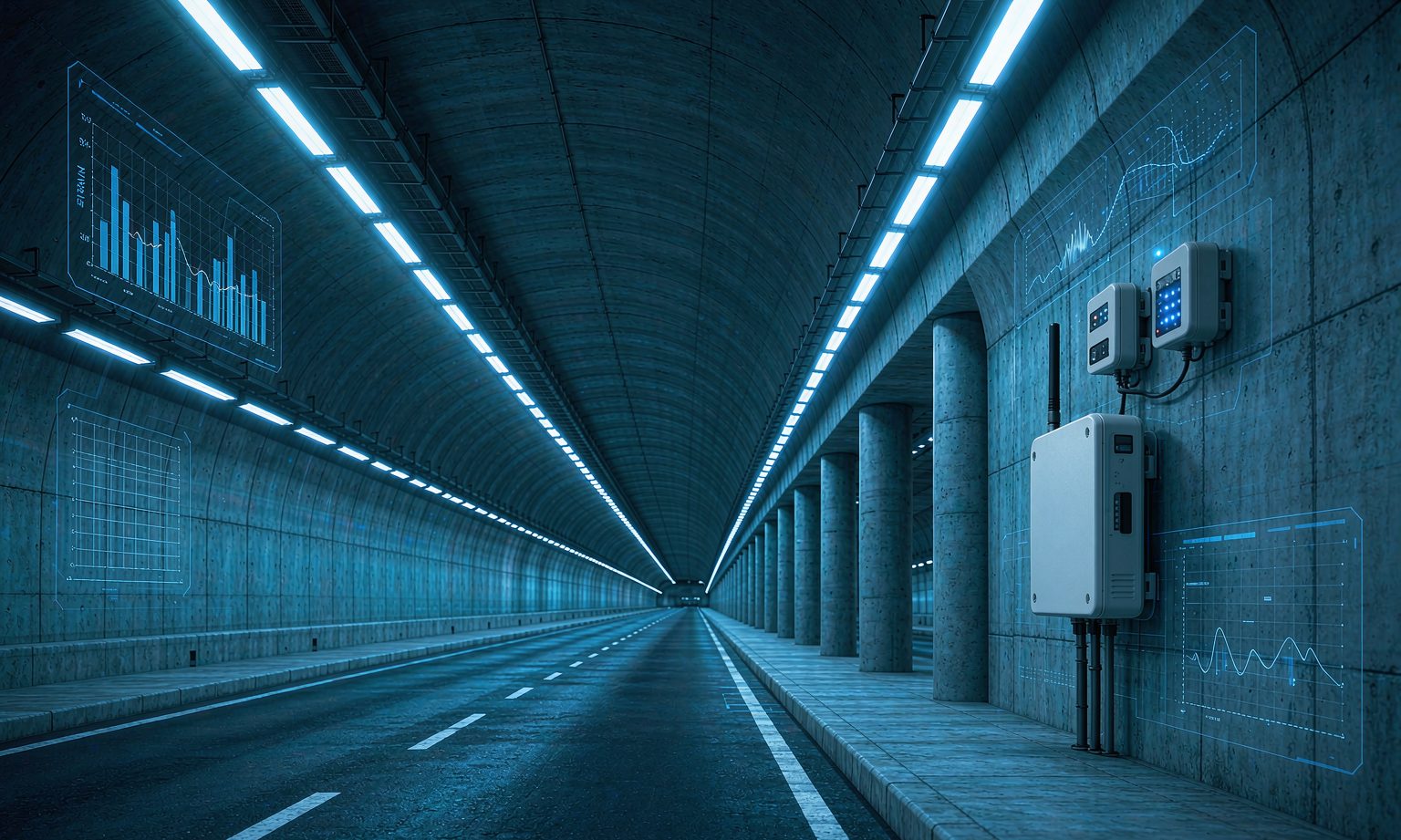
Bringing the "Health-Check Clinic" Deep into Tunnels: How Low-Power Wireless Sensing and AI Vision Are Rewriting Tunnel O&M
Tunnels are the hardest environment in structural monitoring: permanently humid, electromagnetically noisy, with no satellite signal — while manual inspection only captures a single surface glance. The maturity of low-power wireless sensor networks (LoRa/NB-IoT) and AI vision is turning tunnel lining monitoring from "only flagship projects can afford it" into "every tunnel can afford it." This article breaks down what makes tunnels special, the practical keys to deploying wireless sensor networks, how AI vision identifies water seepage and cracks, and a real deployment ledger for a tunnel group.
Read more →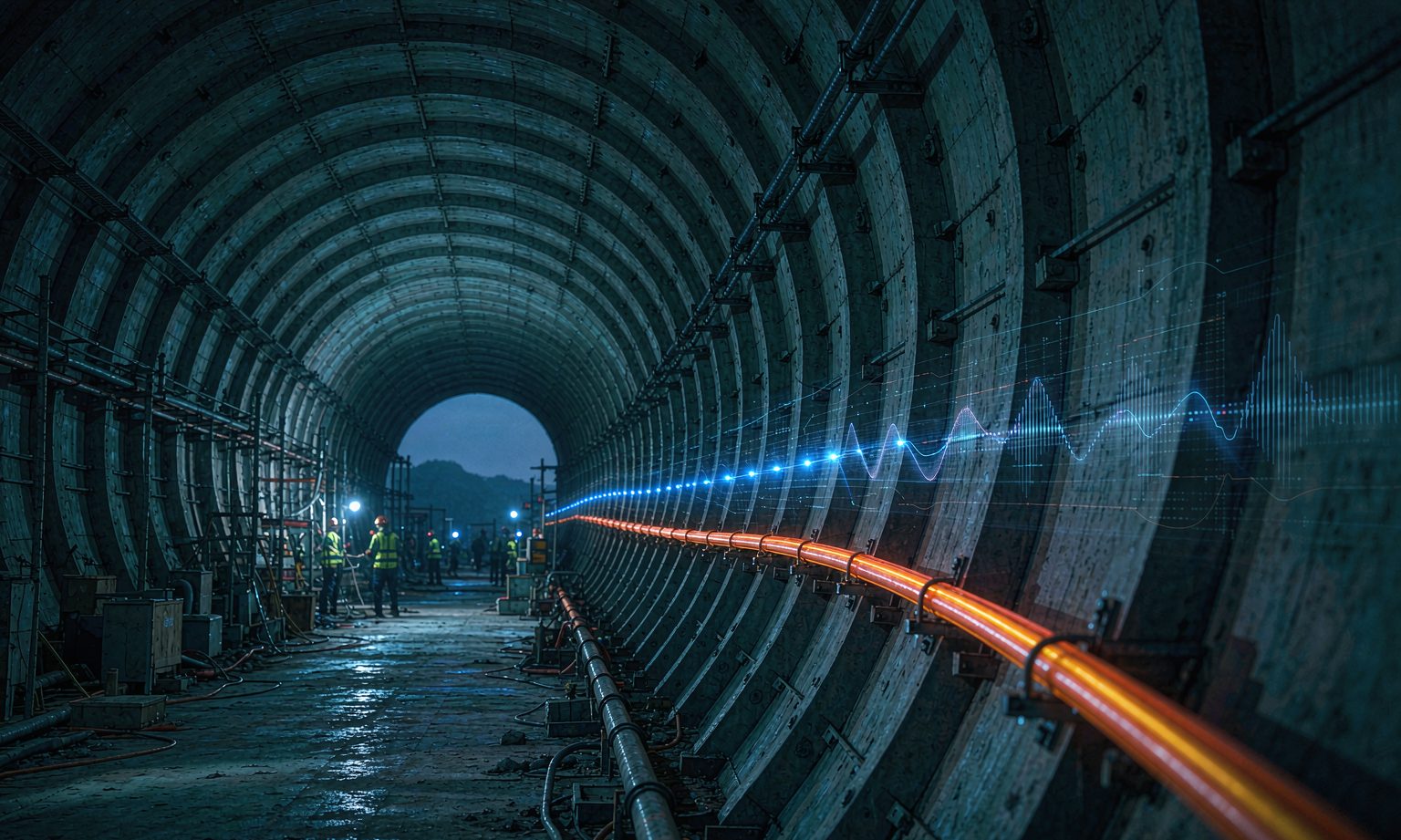
One Cable Listens to an Entire City: How DAS Turns Existing Fiber Networks into Infrastructure Sensors for Free
DAS (Distributed Acoustic Sensing) uses phase-sensitive OTDR so an interrogator can listen for disturbances at every point along tens of kilometers of existing cable — a virtual microphone every few meters without burying new line. This article breaks down the principle, how to read the spec sheet, the economics of pipeline security and road traffic sensing, and the engineering hurdles of false alarms and edge compute.
Read more →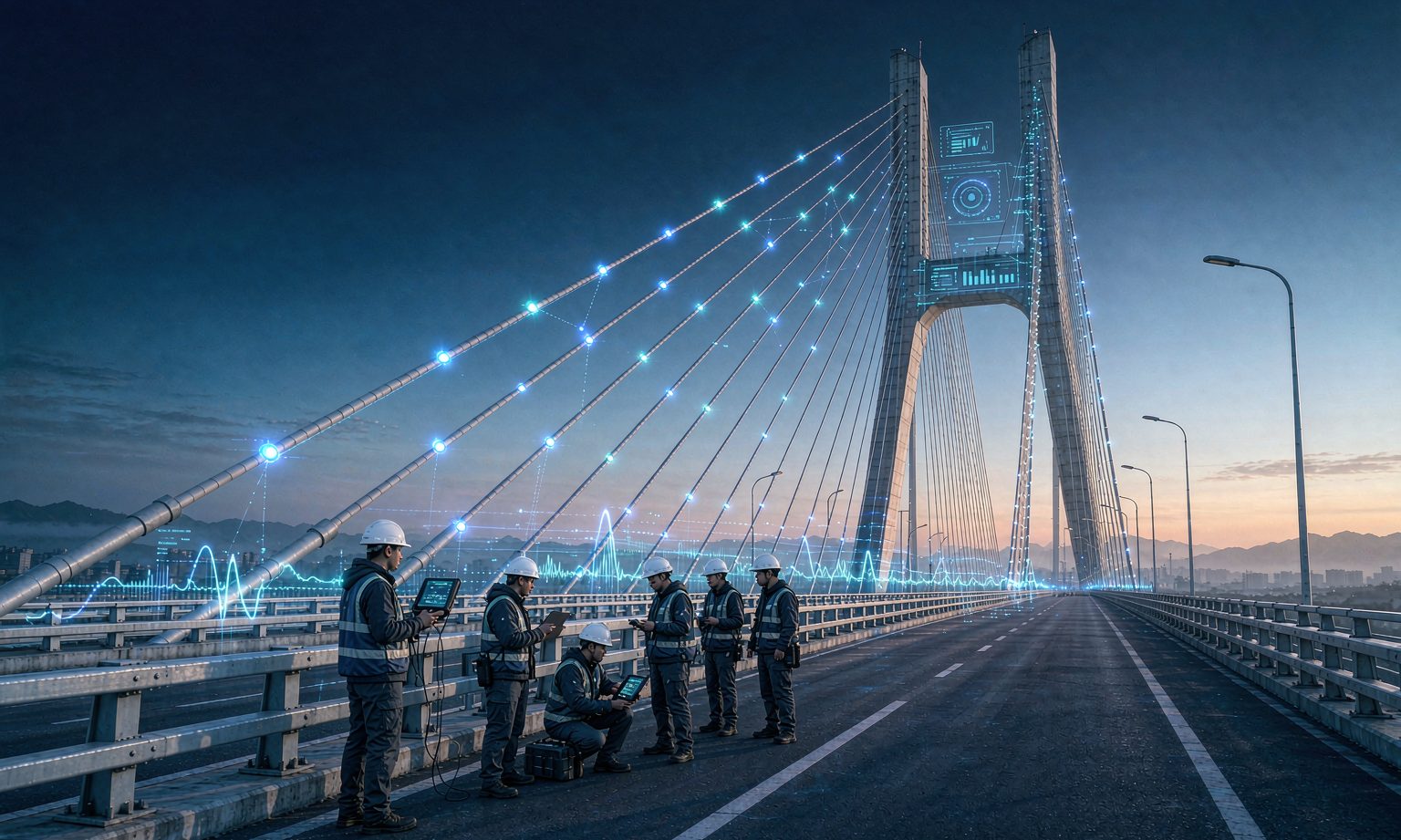
A Chip Goes on the Bridge: How MEMS Accelerometers Are Turning Structural Monitoring from a Flagship Project into a Standard Fixture
MEMS accelerometers have pushed per-unit prices from thousands of yuan down to tens, while resolution advanced from milli-g to micro-g — reshaping the cost structure of structural vibration monitoring. This article breaks down the technology fundamentals, the layered relationship with force-balance and fiber-optic sensing, three engineering hurdles (temperature drift, low-frequency resolution, installation), and three field-proven deployment patterns for low-cost networked monitoring.
Read more →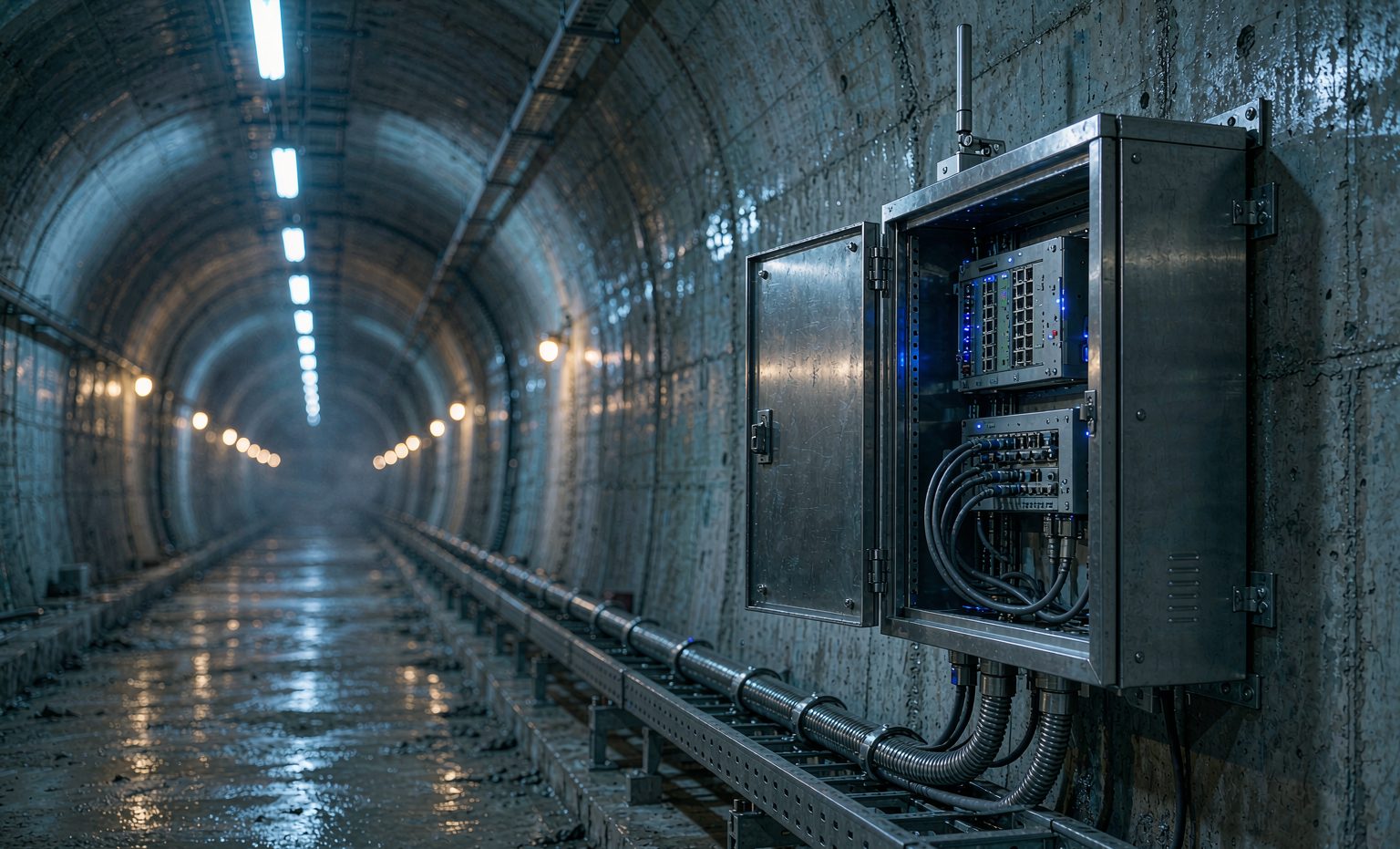
The Last Mile on Bridges, Tunnels and Slopes: Comparing Site Networking Technologies by Cost, Power and Scenario
When a monitoring system fails, it is rarely the sensor — it is the network. Bridges have dirty electromagnetic environments, tunnels have no satellite signal, and slopes often have no power at all. This article puts industrial Ethernet ring networks, EPON, RS-485, CAN, Wi-Fi 6, LoRa, NB-IoT and 5G side by side, comparing bandwidth, reach, power draw and per-point cost, then gives proven network designs for each of the three asset types and the pitfalls that trip up field teams most often.
Read more →
Strong FBG, Weak FBG, or Fully Distributed: Choosing Among the Three Fiber-Optic Sensing Routes
All three routes read structure through a single optical fiber, yet strong-reflection gratings, weak-reflection gratings and fully distributed sensing differ by an order of magnitude in principle, multiplexing capacity, accuracy and cost. This article puts their physics, demodulation schemes and best-fit scenarios side by side, then walks through the pitfalls engineers meet most often on site — strain-transfer loss, temperature cross-sensitivity, optical power budgets and the spatial-resolution trap.
Read more →
Satellites Spot Millimetre Settlement: How Time-Series InSAR Is Rewriting Bridge Fleet Inspection
The real bottleneck in bridge fleet inspection is not sensors but knowing which bridges deserve a closer look. Time-series InSAR inverts millimetre-level deformation from satellite radar phase differences, covering hundreds of square kilometres in a single pass and driving the cost of area-wide screening close to zero. Yet bridges are among the hardest targets for InSAR — north–south blind spots, 72 mm of thermal expansion, loss of coherence over water, and sparse measurement points can each distort the conclusion. This article covers the data-source landscape, a six-step workflow, cost bounda
Read more →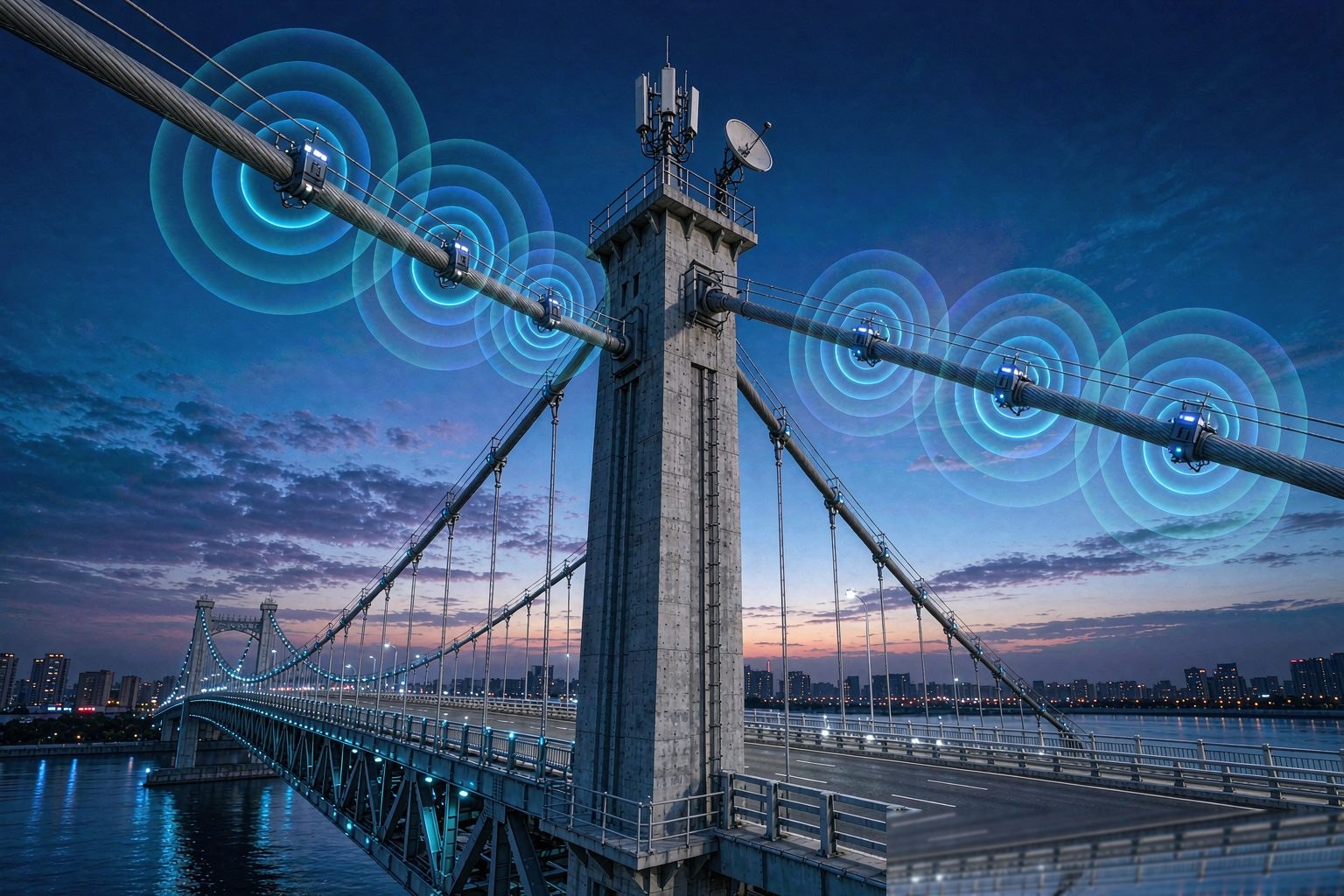
From 5G-A to Satellite IoT: Rewriting the Data Backhaul of Bridge & Tunnel Monitoring
Sensors are useless if the data never makes it home. 5G-A and RedCap have driven down the cost of cellular backhaul, while NTN satellite IoT finally gives mountain bridges and tunnels without public coverage a reliable communication option. This article breaks down the link selection logic and cost math across public network, private network and satellite routes.
Read more →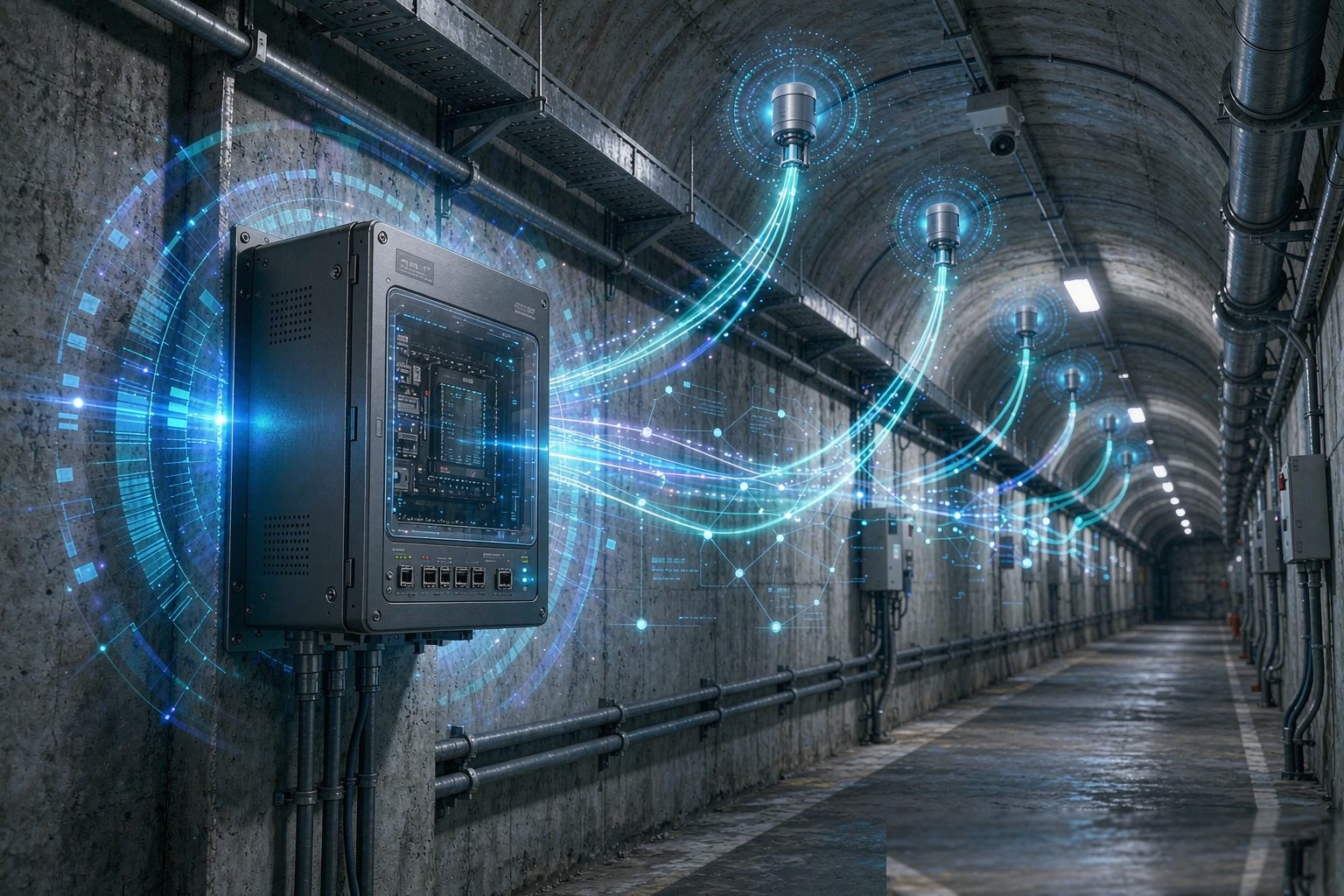
Data Stays Local, Models Still Grow: Federated Learning and Edge Intelligence for Structural Monitoring
Monitoring data involves multiple stakeholders and rarely leaves the owner's domain — does that mean models can't improve? Federated learning plus edge intelligence offers a third way: raw data stays local while model parameters travel. This article explains how to land this architecture in structural health monitoring, what it solves, what it doesn't, and where to place edge compute.
Read more →
Fiber-Optic Sensing + AI: The Next Step in Structural Health Monitoring
From point FBG to distributed Brillouin sensing, from manual threshold alarms to AI self-learning early warning — structural health monitoring is undergoing a paradigm shift driven by fiber-optic innovation and machine learning. This article reviews the current landscape, breaks down the core principles, and offers practical analysis for bridges, tunnels and dams.
Read more →
Sensors Outrun the Bridge, Data Stalls Midway: Choosing a Time-Series Database for Bridge & Tunnel Monitoring
A mid-size bridge monitoring system produces hundreds to thousands of data points per second — over a billion records a year. Where should this data live, how do you query and compress it without overloading the server? InfluxDB, TimescaleDB, TDengine and IoTDB each have their own temperament. This article walks through the selection logic based on real monitoring data patterns.
Read more →
Fiber-Optic Gas Sensors in High-Speed Railway Tunnel Construction
As high-speed railway tunnels increasingly cross coal-bearing strata, gas has become the number one construction risk. Traditional electrochemical and catalytic sensors have inherent weaknesses in gas worksites, while fiber-optic gas sensors — spark-free, long-distance and reusable — are entering tunnel sites. This article covers the technology routes, engineering value and deployment essentials.
Read more →
Distributed Fiber Sensing Meets Digital Twins: Continuous Full-Field Bridge & Tunnel Monitoring
From point FBG sensing to distributed fiber optics (DTS/DAS/BOTDA), and from static BIM models to real-time digital twin closed loops — structural health monitoring is shifting from sampling to full-field coverage, from periodic checks to continuous observation. This article reviews the core logic, key parameters and three real-world deployments.
Read more →
Optical Cable Types and Model Numbering Explained
A structured overview of four mainstream optical cable types — stranded, central loose tube, groove-type and butterfly drop — with their characteristics and use cases, plus how to read model codes under YD/T 908—2020.
Read more →FBG Sensor Essentials (Part 2): Instruments
A field guide to instruments commonly used in bridge and tunnel monitoring: fusion splicers, stripping tools, portable interrogators, OTDRs, stable light sources / power meters and visual fault locators — selection experience and precautions.
Read more →UPS Operation & Troubleshooting Guide for Monitoring Equipment Rooms
Centered on online double-conversion UPS: basic construction, five working modes, maintenance cycles and key operations, plus a quick-reference table for common faults and alarms.
Read more →Safety & Quality Management for Bridge Monitoring Projects
A practical checklist of safety management essentials and quality control metrics across the whole lifecycle of a structural health monitoring project, from mobilization to acceptance, with common-issue handling methods.
Read more →FBG Sensor Essentials (Part 1): Fiber Selection & Field Parameters
Fiber type selection (G.657 vs G.652), in-channel attenuation budgeting and bend-radius best practices — key field parameters for bridge and tunnel monitoring deployments, systematically organized.
Read more →